Stainless Steel Grills Near the Ocean: Salt Air, Tea Staining and What to Do
Coastal air is hard on stainless steel, and a little routine care goes a long way.
October 20, 2026 · 4 min read
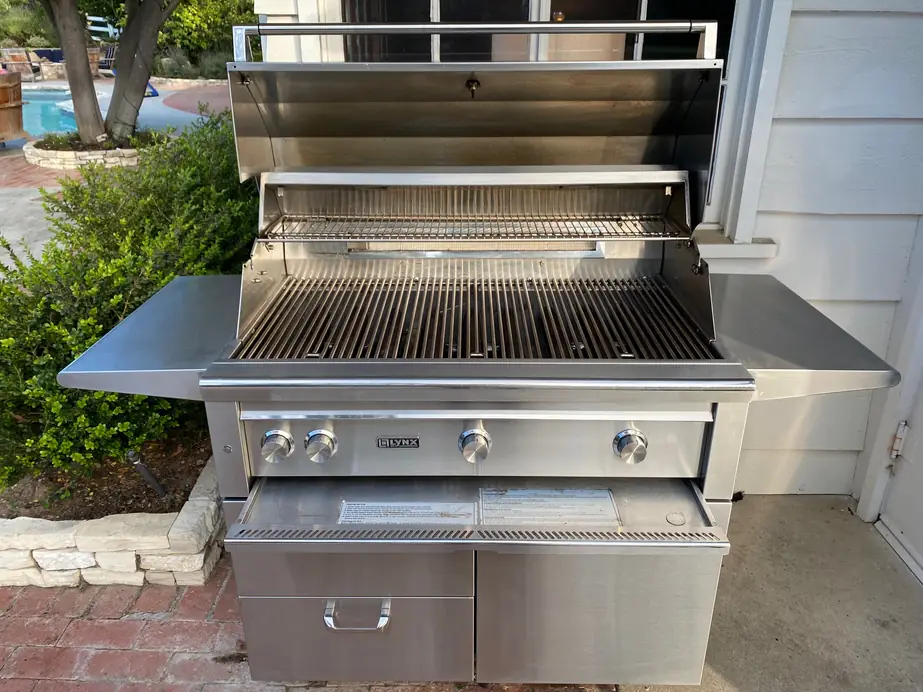
Stainless steel has a reputation for being rustproof. It is not. It is rust-resistant, which is a different thing, and the South Bay tests that difference more than most places. If your grill lives in Redondo Beach, Hermosa Beach, Manhattan Beach, San Pedro or up on the Palos Verdes hills, the air that makes your evenings so nice is also working on your hood and knobs.
Why salt air is hard on stainless
Stainless steel protects itself with a thin, invisible layer on the surface. That layer forms when the chromium in the steel meets oxygen, and it is what keeps the metal from rusting. Salt is one of the things that breaks it down. Ocean air carries fine salt, and it settles on surfaces as a light film, often overnight with the marine layer. Where that salt sits on a grill, the protective layer can be damaged and the steel underneath is exposed.
The first sign is usually not red rust. It is a brownish, tea-colored haze, often on the hood, the control panel and the handles. It is called tea staining. It looks bad, and it is mostly cosmetic at first, but it is a warning that the surface is under attack and that, left alone, it can turn into pitting and real rust.
Where it shows up first
- The hood, especially the top and edges where fog and dew settle.
- Knobs, bezels and the control panel, where moisture collects around the fasteners.
- Hinges, handles and screws, which are often a lower grade of metal than the panels.
- Welds and seams, where the finish is thinnest.
- The firebox and burners, which hold moisture and grease and corrode from the inside.
Not all stainless is the same. Grades differ in how well they handle salt, and higher grades, often described as marine grade, hold up better near the coast. Even good stainless needs to be kept clean, because salt and grease are what give corrosion a place to start.
A wipe-down routine that helps
The most effective habit is also the cheapest. Rinse the salt off before it sits. With the grill cool, wipe the exterior with a soft cloth and warm water with a little mild dish soap. Go with the grain of the steel, which you can see as faint lines in the surface. Rinse the cloth often, wipe again with clean water, and dry the surface so water spots do not form.
A few things to avoid:
- Steel wool or rough pads, which scratch the surface and give salt more places to hide.
- Chlorine bleach and cleaners with chlorides, which are hard on stainless steel.
- Leaving the grill wet under a cover that traps moisture against the metal.
- Pressure washers aimed at the control panel and knobs, which can push water where it should not go.
Covers: helpful, but not magic
A fitted cover keeps salt, dust, bird droppings and leaf debris off a grill, and it is one of the better investments near the coast. Put it on when the grill is cool and dry. A cover that goes on over a wet or warm grill traps moisture, and the grill can end up worse off than if it had been left uncovered. Lift the cover now and then to check underneath, and shake it out so grit does not sit against the finish. BBQ covers are among the things we handle, along with parts and accessories.
Why a deep clean twice a year is a sensible suggestion
Wipe-downs handle the outside. They do not reach the burners, the firebox, the flavorizer bars, the drip pan or the underside of the hood, and those are the places where salt, moisture and grease combine. A thorough cleaning every so often takes the grill apart and gets at what a cloth cannot.
For a grill within reach of the ocean breeze, a deep clean in spring and another in fall is a reasonable rhythm to think about. It is a suggestion and not a rule. A grill used every weekend, one that sits under a covered patio and one that faces open air each have different needs, and a look at yours will tell you more than a calendar will.
Our deep cleaning covers the exterior as well as the inside. That means a deep clean and polish of the exterior, knobs and handles, and removal of surface rust, using eco-friendly, biodegradable, non-caustic products.
When light rust needs attention
Small rust spots and tea staining are usually treatable if you catch them early. Deep pitting, rust at the seams or rust that has gone through a panel is a bigger conversation. At that point the question is whether the part can be repaired or replaced. A grill looked at early is often cheaper to keep going than one left alone for several seasons.
A simple coastal checklist
- Rinse and wipe the exterior with mild soap and water, then dry it, on a regular basis.
- Cover the grill when it is cool and dry.
- Check knobs, hinges and fasteners for brown staining or rust bleed.
- Look inside the firebox and under the burners at the start of the season.
- Consider a deep clean in spring and fall if that rhythm suits how you use the grill.
South Bay Grill Cleaning cleans and repairs stainless steel grills at your home across the South Bay, from the beach cities to the Palos Verdes Peninsula. Call (310) 994-8408 to schedule a cleaning or a free estimate.
South Bay Grill Cleaning, (310) 994-8408
Call (310) 994-8408More articles
Overheating Your Grill: Why It Runs Hot and Flares Up
When the lid thermometer and the knobs stop agreeing, the grill under them has usually changed.
How to Measure Your Grill Before You Book a Cleaning
A tape measure and two minutes will tell you which size band your grill falls into.