Overheating Your Grill: Why It Runs Hot and Flares Up
When the lid thermometer and the knobs stop agreeing, the grill under them has usually changed.
October 20, 2026 · 4 min read
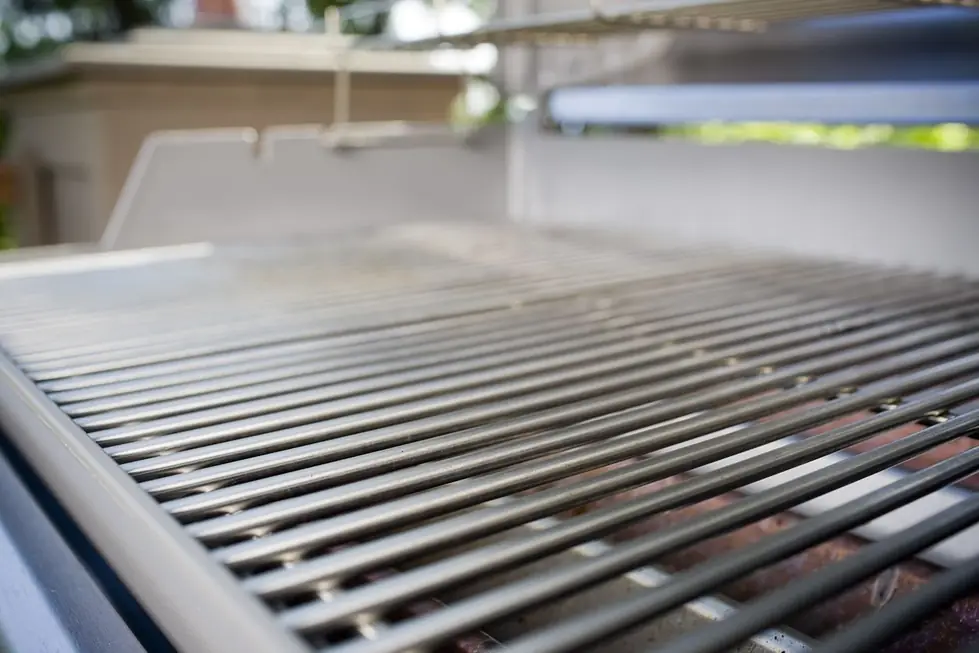
Most grill owners notice it the same way. The lid thermometer climbs past 600 when the knobs say medium. Burgers blacken outside while the middle is still pink. Flames jump through the grates the second a little fat drips. The knobs did not lie. The grill underneath them changed, and most of the time the change is grease.
Why a dirty grill runs hotter than the dial says
A gas grill is built to move heat along a set path. The burners fire, the flavorizer bars or heat plates above them catch the drippings and spread the heat, and the grates sit on top and do the cooking. Grease breaks that path. Every cookout leaves a little fat on the bars, the firebox walls, the drip pan and the inside of the hood. Layer by layer it bakes into a hard, black crust.
That crust is fuel. When the grill heats up, the buildup smolders, smokes and sometimes ignites on its own, adding heat the burners never asked for. The thermometer reads high, the food cooks unevenly, and the grill is working against the person standing at it.
Flare-ups are a grease problem first
Some flare-up is normal. Fat hits a hot surface and flashes. But a grill that erupts every time you close the lid is usually carrying old grease somewhere it should not be. The usual places are:
- The bottom of the firebox, where drippings collect when the drip tray is full or blocked.
- The tops of the flavorizer bars or heat plates, where grease cakes on instead of burning off cleanly.
- The drip pan and grease tray, especially if the liner has been left in too long.
- The grease channel that leads to the catch cup, when it has hardened and stopped draining.
If flames are rising from the bottom of the grill and not just at the grates, treat it as a grease fire. Turn the burners off, close the gas at the tank or the valve if you can do it safely, keep the lid closed to starve the fire, and keep water away from it. Once it is out and cool, the grill needs a proper cleaning before it goes back into service.
The burn-it-clean habit
Plenty of people finish a cookout by turning every burner to high, closing the lid and walking away to let the grill burn itself clean. It feels logical. It does burn off loose food on the grates. It is also hard on the grill, and it does little for the grease that has already hardened below.
Running a grill flat out with grease underneath is exactly how buildup catches fire. It also stresses the parts you most want to last: burners, igniter wires, knobs, the thermometer and the finish on the hood. A better habit is a short burn with the lid closed, a brush on the grates while they are still warm, and a wipe of the hood once everything has cooled.
What you can check yourself
You do not need tools to get a read on your grill. With the gas off and the grill cold, look at these things:
- Lift the grates and look at the flavorizer bars. Heavy black crust, flaking or holes mean they are carrying too much grease or wearing out.
- Look at the firebox floor. A thick layer of residue or standing grease is a flare-up waiting to happen.
- Check the drip pan and the catch cup. If they are full, empty them and see whether the grease drains freely.
- Look at the burner ports. Small flames at some ports and none at others point to clogging, which causes uneven heat and hot spots.
When it stops being a do-it-yourself problem
Scrubbing the grates and emptying the drip pan are fair jobs for any owner. Past that, the line is a sensible one. If the flame is uneven, if you smell gas, if parts are warped, or if the grill overheats even after a good wipe-down, stop using it and have it looked at. Gas connections, regulators and valves are not a place for guessing.
A deep clean from us covers the parts that are hard to reach: grates, racks, flavorizer bars, heat plates and briquettes, the firebox, drip pan and grease tray, the inside of the hood and the burners. It also includes a full inspection of the igniters, gas line and tubes, valves, orifices, regulator and thermometer, so a problem hiding behind the grease gets found and not just cleaned over. Cleaning is priced by the width of the grilling surface, and repair work starts with a $150 service call that has a one-hour minimum.
A simple routine that keeps the heat honest
- After each cookout, brush the grates while they are warm and empty the grease catch cup.
- Once a month in grilling season, check the drip pan and the firebox floor and scrape off loose residue.
- At the start of each season, look over the burners and flavorizer bars before the first big cookout.
- Keep a cover on when the grill is cool and not in use, so dust, leaves and webs stay out.
- Book a professional deep clean when the crust is heavy, flare-ups keep returning or the heat stops matching the dial.
South Bay Grill Cleaning cleans and repairs grills at your home across the South Bay, and we are glad to look at a grill that runs hot. Call (310) 994-8408 to set up a cleaning or a free estimate.
South Bay Grill Cleaning, (310) 994-8408
Call (310) 994-8408More articles
How to Measure Your Grill Before You Book a Cleaning
A tape measure and two minutes will tell you which size band your grill falls into.
Flavorizer Bars, Heat Plates and Briquettes: What They Do and When to Replace Them
The parts between your burners and your grates do more work than they get credit for.