Flavorizer Bars, Heat Plates and Briquettes: What They Do and When to Replace Them
The parts between your burners and your grates do more work than they get credit for.
October 20, 2026 · 4 min read
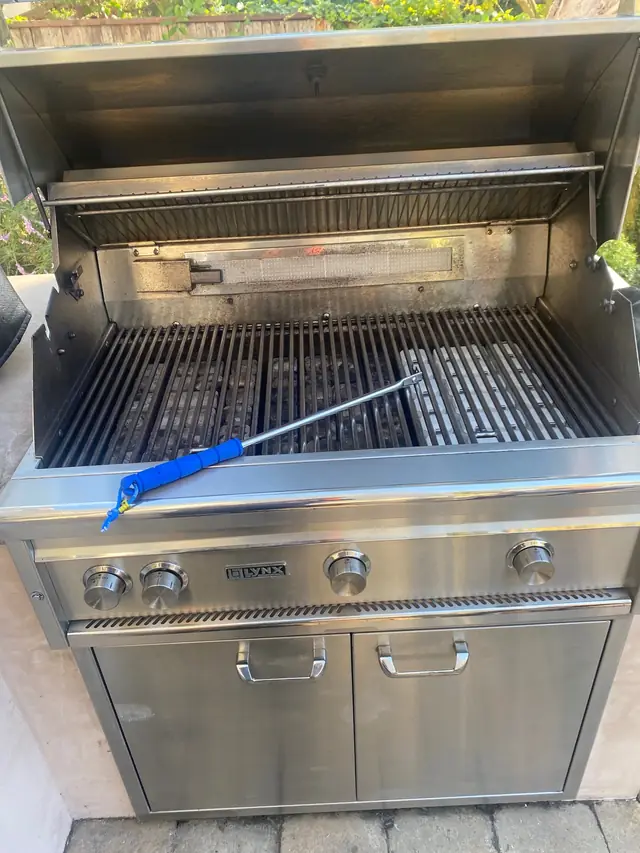
Lift the grates on a gas grill and you will find a layer of parts sitting between the grates and the burners. Depending on the brand they are called flavorizer bars, heat plates, heat tents, radiants, ceramic briquettes or lava rock. Most owners never think about them until the grill starts flaring up or heating unevenly. They are some of the hardest-working and fastest-wearing parts in the whole grill.
What these parts actually do
They do three jobs at once. First, they shield the burners. Without something above them, every drop of fat and marinade would fall straight onto the burner tubes and clog the ports. Second, they spread heat. A burner puts out heat in a line, and the plate or bar above it turns that line into a broad, even warmth across the grates. Third, they create flavor. Drippings that land on a hot bar vaporize into smoke and rise back into the food, which is much of what people mean by grilled taste.
Each type does this a little differently:
- Flavorizer bars and heat tents are metal, usually stainless steel or porcelain-coated steel, shaped like a roof so drippings slide off to the sides.
- Heat plates and radiant plates are flatter metal sheets, often with holes or slots, that sit over the burners and spread the heat.
- Ceramic briquettes sit in a tray or over the burners and radiate heat evenly while catching some of the drippings.
- Lava rock does a similar job and is porous, so it soaks up grease over time.
Whichever your grill uses, these parts sit in the hottest and dirtiest zone in the cooking system. They take the heat, the grease and the moisture, all at once, every time you cook.
Signs they are worn out
Look at them with the grill cold and the gas off. These are the signs that point to a part that is past its best:
- Holes or thin spots where the metal has rusted or burned through.
- Flaking porcelain coating, with bare metal showing underneath.
- Warping or sagging, so the bar no longer sits flat or shields the burner the way it used to.
- Cracked or crumbling briquettes, or briquettes that look dark and wet with absorbed grease.
- Hot spots on the cooking surface and cooler zones that were not there before.
- Flare-ups that keep coming back even after a good scrape.
- Burner ports that clog quickly or burner tubes that look pitted, which can follow a bar that has stopped doing its shielding job.
One or two of these does not mean the grill is finished. It does mean the parts above the burners are worth a close look.
Clean it or replace it
Most of the time the answer depends on whether the metal is still sound. Heavy black crust, baked-on grease and surface rust are cleaning problems. A thorough cleaning takes the buildup off and shows you what is underneath. If the bar or plate is still solid, it can go back in and work properly, with less smoke and fewer flare-ups than it gave you before.
Replacement is the answer when the metal itself is failing. A bar with holes in it no longer protects the burner. A plate that has warped will not spread heat evenly. A briquette that is cracked through, or soaked with grease so that it smokes every time, is better swapped for a fresh one than scrubbed again.
Ceramic briquettes and lava rock are a special case. They are porous, so they hold grease deep inside, and a surface scrub does not reach it. When they have turned dark and greasy, the sensible move is new ones.
Why harsh cleaners are a poor shortcut
It is tempting to hit crusted bars with a strong oven cleaner. Caustic products can attack coatings, leave residue that ends up near your food, and give off fumes in a closed backyard. The cleaning products we use are non-caustic, eco-friendly, non-toxic and biodegradable, and the grill is taken apart and cleaned part by part, so the grease is removed and not just moved around.
Getting the right replacement
Parts for these components are not one-size-fits-all. A bar for one model will not necessarily fit another, even within the same brand, and shape and length both matter. The simplest way to avoid a wrong order is to have someone who works on grills look at the model and measure what is in there. If your grill needs a repair, we can get the parts that are right for your grill, and briquette replacement is one of the services we offer at your home.
A quick routine to protect them
- Brush the grates after each cook, while they are still warm, so less falls through.
- Empty the grease cup and check the drip pan regularly.
- Scrape loose buildup off the tops of the bars with a soft scraper or brush after the grill has cooled.
- Look at the bars and plates at the start of each season.
- Keep the lid or a cover on when the grill is cool so moisture does not sit on the metal.
South Bay Grill Cleaning cleans grills and replaces briquettes and other parts at your home across the South Bay. If you are not sure whether your bars and plates need cleaning or replacing, call (310) 994-8408 and we will take a look.
South Bay Grill Cleaning, (310) 994-8408
Call (310) 994-8408More articles
Overheating Your Grill: Why It Runs Hot and Flares Up
When the lid thermometer and the knobs stop agreeing, the grill under them has usually changed.
How to Measure Your Grill Before You Book a Cleaning
A tape measure and two minutes will tell you which size band your grill falls into.